Anarcho-Architecture
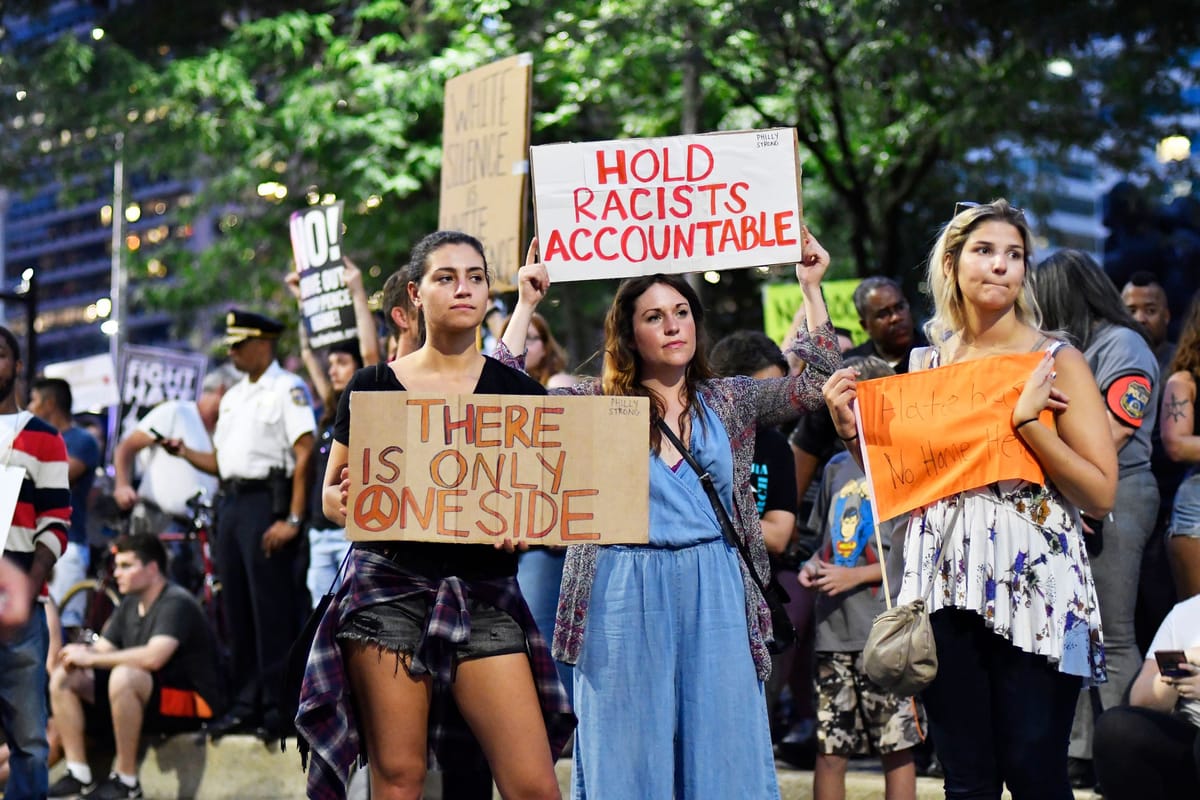
Architecture and Anarchy. One is often associated with ordering and structure. The other with chaos, rebellion, fire and destruction. The pairing of these terms is rare. But in a time where real estate markets reduce housing, even the city, to commodity. It raises the question: who is the city really built for? And how can the anarchist thought bring new models for urban development to light and propose a contrary force to spreadsheet-led development, to ground it in equity and increase autonomy. To make this case I will show through historical reflection and case studies that architecture can be reclaimed as a collective, participatory act of society-building and a counter to the top-down planning of imposed hierarchy and power.
Anarchy: beyond the image of the bomb throwing desperado
There is no social or intellectual movement as widely criticized and demonized as anarchy. The collective mind of the 20th century regards the anarchists as ‘...bomb throwing desperadoes, wishing to pull down civilization. ’ (Marshall P. , 1992). Implicating the violent nature of this culture – or as Theodore Roosevelt puts it: ‘Anarchism is a crime against the whole human race and all mankind should band against anarchists.’
Anarchy is the condition of people living without a ruler. Anarchists reject the legitimacy of governments wielding by default the monopoly on power and they condemn the notion of imposed hierarchy and coercive authority. They seek to establish a condition of anarchy, where a society can self-manage withing a decentralized system of collective initiatives by free individuals. The thought-collective of anarchism traces back to the first order imposed on man, where the desire to rule is faced with resistance to being ruled. To bring balance to the force, let’s say.
Anarchist communities form around several core values, as described by the elusive publicist Morpheus on the Anarchist Library:
• Non-hierarchy: power is shared and consensual rather than imposed.
• Direct action: individuals act collectively without intermediaries or centralized control.
• Mutual aid: communities cooperate voluntarily for mutual benefit.
• Free association: social bonds are freely chosen.
• Anti-consumerism: opposition to the commodification of life and nature.
• Egalitarianism: commitment to equality in wealth and power.
These principles are recognizable today in the grassroot movements of society. For example during COVID, where people set up collectives based on mutual-aid and direct action. There was a movement to free people from their work and instill a sense of richness in other parts of life. To bring members of the community together. To discover the beauty of their immediate surroundings like public parks or the street they live on. See, the institutions failed under pressure, where communities succeeded. It is the community that underpins meaningful urban life and fills the cracks left by its institutions.
Architecture: more than design
Architecture is more than the design and development of building plans. It is an act of culture – for which the germans always have a word: Baukultur. A cultural force that shapes the way we meet each other, work, relax. In short, architecture shapes the way we life our lives. Benevolently, it reflects societal values in a built form. Malevolently it becomes a tool of control. Standardizing life, dictating behaviour and reinforcing systemic patterns.
I want to present an important idea that still resonates in architects’ work, that I believe is an important indicator of how architecture shapes society. It is the idea that form follows function: utilitarian architecture - by Louis H. Sullivan claims that ‘form ever follows function’ in an effort to shape a new aesthetic for the office building. Sullivan claims that the physical appearance should always be derived from the buildings function in a clearly readable manner (Sullivan, 1896).
“All things in nature have a shape, that is to say, a form, an outward semblance, that tells us what
they are, that distinguishes them from ourselves and from each other. (...)
It is the pervading law of all things organic and inorganic, of all things physical and metaphysical,
of all things human and all things superhuman, of all true manifestations of the head, of the heart, of
the soul, that the life is recognizable in its expression, that form ever follows function. This is the
law” (Sullivan, 1896).
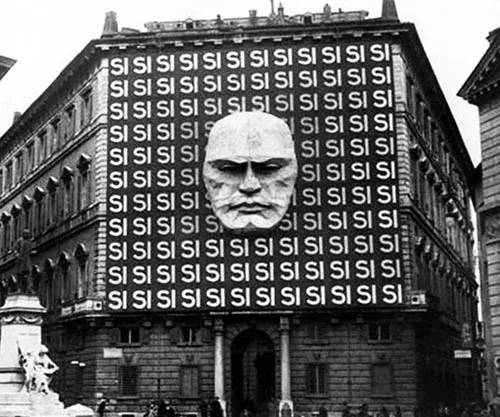
It seems that Sullivan is a devout believer that his ideas on form and function are a universal constant. Some might call that arrogance. But it is a product of his time, where the scientific method is being introduced to the field of architecture and a quest for objectivity begins. And it is this longing for objectivity that has led to the prevalence of spreadsheet driven development today. But architecture is not purely utilitarian. It is a form of expression, symbology and also highly political. See the cathedral as more than a place of worship and repentment but as an affirmation of
spiritual power. A Gothic facade tells a different story than its neighbor in Art Nouveau. It speaks
beyond aesthetic preference; it reveals cultural and ideological position.
The Anarchist counterforce: process, form and society-building
In this paragraph I want to present the case for anarcho-architecture, which presents a different way of building in most facets of the architectural field. Process wise it would change to way we organize design and development of buildings and urban structures. It would be more in dialogue with users and others present in the environment. It will change the architectural form of the building, as it is a reflection of its neighboring society. And lastly it will have profound societal impact. Where communities are empowered to not only participate but take ownership of their urban environment. To find moments of connection with it and to have access to amenities previously reserved for those who could foot the bill. Through real world examples – though these are not necessarily built by anarchist collectives but do align at least in part with Morpheus’ anarchist tenets.
To Squat for equality
An abandoned hotel in Amsterdam, Hotel Mokum, as it became popularly known. A group of friends affiliated with the squatters’ movement “Take back Mokum” occupied this building in 2021. Much to the anger of the hotel investors, who appealed to the municipality of Amsterdam to force an eviction. In favor of the former, the municipality argued that the fire safety and structural integrity of the building posed an acute danger and therefore an immediate eviction of the building was justified. After mayor Femke Halsema granted permission, the police targeted the squatters; despite negotiations a spokesperson of the squatters described to have had the feeling that this
reveals a deeper “gap between citizen and government. [BP]”
In the light of growing inequality squatting has strengthened the access to the free city and the right to the city. René Boer sheds an interesting light on this, arguing that the neoliberal city benefits from stability and therefore actively excludes elements of disruption to the status quo. such as displacing unfitting residents to prevent temporary or marginal elements from persisting in the urban space. These may be actions, or people, who do not fit the generally accepted script; and for that reason they are pushed out of those spaces. In this way, our cities are being transformed into a neat façade that, in all its diversity and supposed safety, has no tolerance for the misfits [RB].
The city is moving towards an average form. A form that does not offend, but is standardized: one size fits all. In this sense, the city is also anti-democratic. Richard Sennett emphasizes this in his lecture series ‘Democracy and Urban Form’. He describes how this neoliberal policy and the resulting homogenization of the city breaks down its democracy through disassembling its inhabitants’ pluriformity. Where dialogue stops, democracy dies [RS]. Access to affordable housing has decreased as a consequence of neoliberal policy to liberalize real estate. To take socialized housing back out of circulation and into the market. The squatters’ movement presented their argumentation as them offering a solution to the problem of commodification and the growing housing crisis, where deregulation causes social inequality to rise. As one member of the squatters’ movement said: “Are we a city for artists and teachers, or are we a city only for people who can pay absurdly high rents? [BP]”
The neoliberal city, which strengthens its position by forcing a constant state of order and thereby not only sharpens inequality, but also lessens the plurality of society. The squatting movement acts as a force that, despite repression, challenges the status quo with the aim of ensuring access to the city for marginalized groups, misfits, or the working class. In doing so, it not only strengthens the democratic discourse but also demonstrates the importance of social processes. Not only does squatting provide housing, it also creates cultural programming, and serves as a music venue in the evening or neighborhood center at noon. In this way, vacancy is transformed into urban commons, without profit incentive [BP]. So, the anarchic force creates equality, where the neoliberal city does the contrary.
The Lewisham cooperation: a process that empowers community
The Lewisham self-built cooperative is a collaboration by black inhabitants of London from the late 1980’s. When black people in London had hardship in access to housing – the policy was along the line of ‘own folk first’ – who took matters into their own hands, and that after the city having invited those interested in self-building from the housing waiting list, according to build their own housing on a derelict site. Each builder engaged and spending time on construction during spare time and their weekends.
The architect of the housing, Walter Segal, imagined a construction process where its mostly vertical beams that could be assembled flat on its side outside, than hinged
into place. The city offered favorable pricing on the land which carried over to the builders’ children. The city had made choices that enabled those without access to housing to develop cheap land, according to their own needs. Where construction required assistance it could be found within the community, enabling it to be self-reliant and resilient [LH].
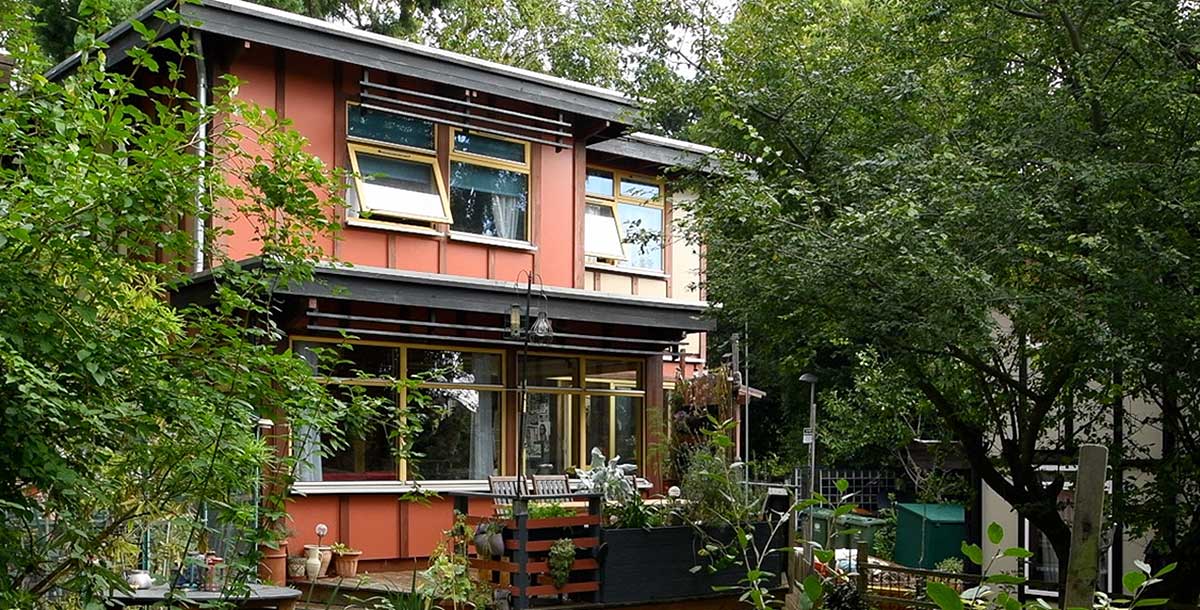
The role of design in the process was understanding the specific needs of the future inhabitants, and to form the construction, executed by amateurs in their spare time, resulting in a precise design that met the needs of the communities. It enabled them to construct within the field fast those the floorplan they wanted, and the gridded construction method has proven to be valued for its flexibility by the next generation of inhabitants. So: to crowdsource the efforts of construction, and to develop a design process that is open, open-ended and adaptable, and positioned around mutual aid. With support from the city with affordable access to land and good financial incentives, a resilient community is still thriving in Lewisham, UK.
The garden and the city
When I attended a series of talks, hosted by the World Garden Cities Movement, there was an interesting change of the interpretation of the core values of the contemporary garden city. Where the original model by Ebenezer Howard, based on a strong social-democratic foundation, ensuring good quality of life for the common worker of the time, with nearby community amenities was counteracted by an example presented by the partners of MVSA-architects showing white glass and steel facades, highly enveloped by greenery, from grasses to bushes and even small trees. With an intricate irrigation system recycling rainwater for the vegetation. The plot was deemed a derelict site by the municipality of Amsterdam, although neighborhood consultation has shown it to be of value by the neighboring inhabitants. The architects sold the lush greenery on the building as a net
compensation to the green area that was to be built on, accessible by the surrounding inhabitants.
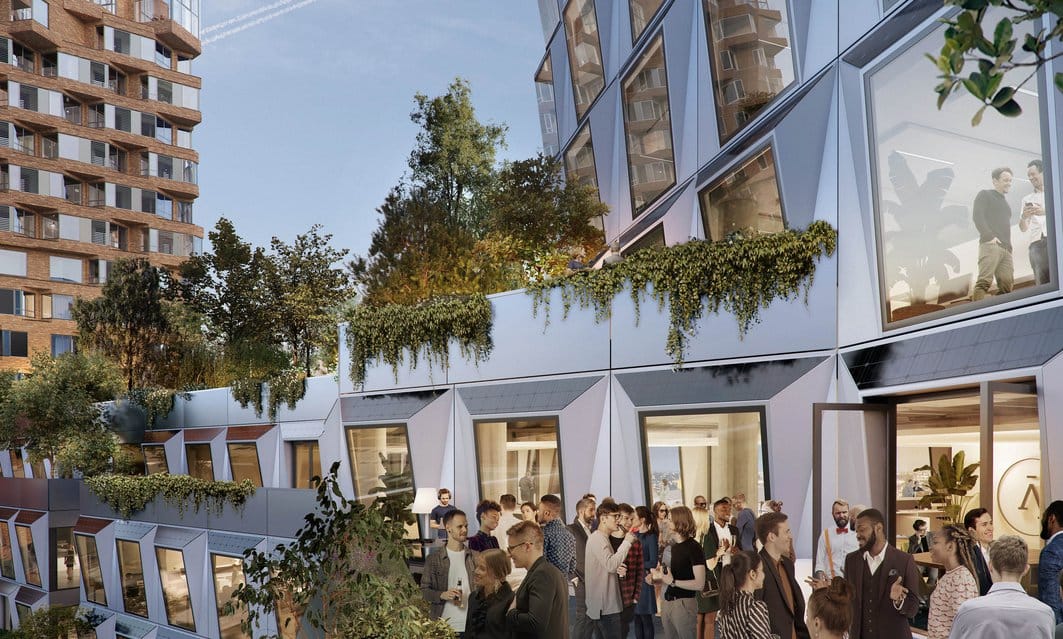
However, these promises have shown not to amount to much as a high number of semi-private space ends up gated after hosting the ‘wrong’ kind of people or uses, and so the promise of equal accessibility is lost [BS]. This type of garden city is a product of neoliberal urbanism which is nothing more than a garden in a city. It creates property value, taking away common green area, harvest rainwater for its own ‘biodome,’ inaccessible for those who don’t fit the script of the place.
A contrary I present to the inaccessible ‘biodome’ architecture is a diverging form of architecture known as Earthships. Seeking a way to mitigate the environmental damage of the construction industry by reusing waste as a building product. Architect and father of the concept explains Earthships as follows: “Our biotecture methods are an attempt to empower individual people to be able to take care of themselves in a decentralized earth logic way [MK].”
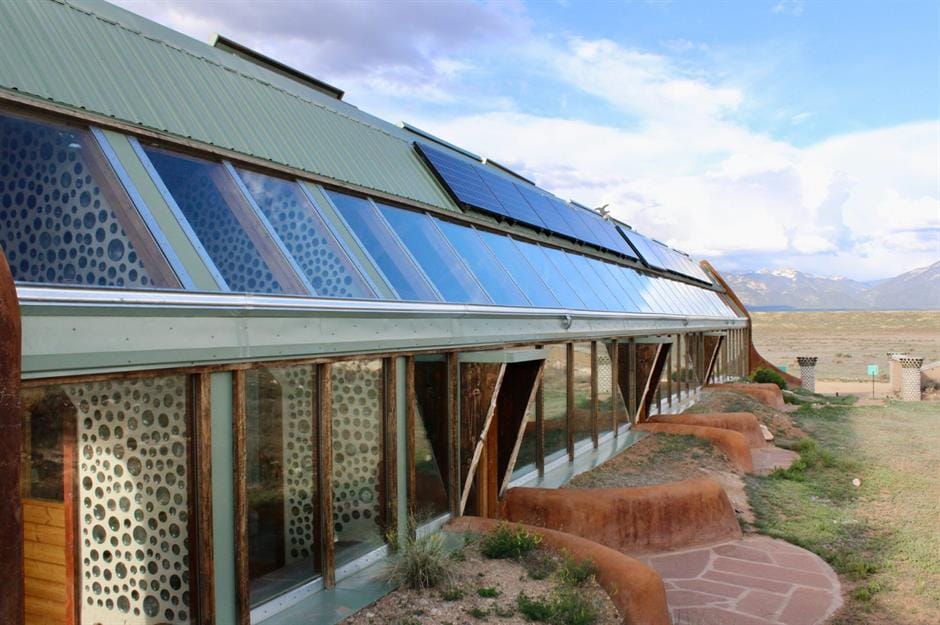
Earthships intend to use the land they sail as commons, temporarily occupying space with
sensitivity to what was there before, regenerating ecosystems and connecting ecological thinking to its surrounding communities. While mostly being housing for individuals, an Earthship can also be a community center or a disaster relief shelter. For example, the World Earthship Community in Taos, USA features private lots with a common water system. Roads are developed and maintained by the community and there are education programmes about ecology and the Earthship philosophy.
A single Earthship constructed in Brighton, UK serves as a community center. Functioning as a self-sufficient and sustainable beacon, bringing community members together. Offering employment opportunities to community members and being a place for learning and education (LCT, n.d.).
In conclusion
Earthships, though on a very different place on the spectrum of housing, shows how values
permeate through the built environment and can make it richer and more complex. It shows how low tech can achieve a pleasant and sustainable environment. It shows how a building can empower a community rather that take its amenities away. Just like the Lewisham residents who took matter in their own hands and constructed the house of their dreams while also forging a strong community and making city where the city couldn’t. As neoliberal cities try to exclude elements which disrupt
the order it needs to exist, squatting is a method to puncture this script imposed on the urban space. Creating access to the city for the misfits. Strengthening democratic processes and community outreach.
I believe there is a case to be made for anarcho-architecture. And it is quite a simple change of heart. To feel a connection with community and ask yourself if your actions strengthen or weaken that community. Together, the cases of squatting, self-build cooperatives, and Earthships reveal that architecture is not just a matter of form, function, and utility. But of power. Architecture can be an inclusive or exclusive force. Where neoliberal urbanism reduces housing to a spreadsheet and green space to marketing, The anarchists remind us that the city can be a commons. Architecture, when grounded
in autonomy and mutual aid, becomes not a product to be consumed but a practice of building society and a richer, more meaningful urban life.